For most students, real SAT preparation starts in the autumn of grade 11 and the first real sitting is in the spring of grade 11. Starting earlier is not better, and this is the part parents are rarely told: a meaningful share of SAT Math has not been taught yet in grade 9 or 10. Advanced Math is roughly 35% of the Math section, and paying for tutoring on material a student has not met in class is paying to teach the curriculum twice.
What the earlier years are for is diagnosis, and it is free.
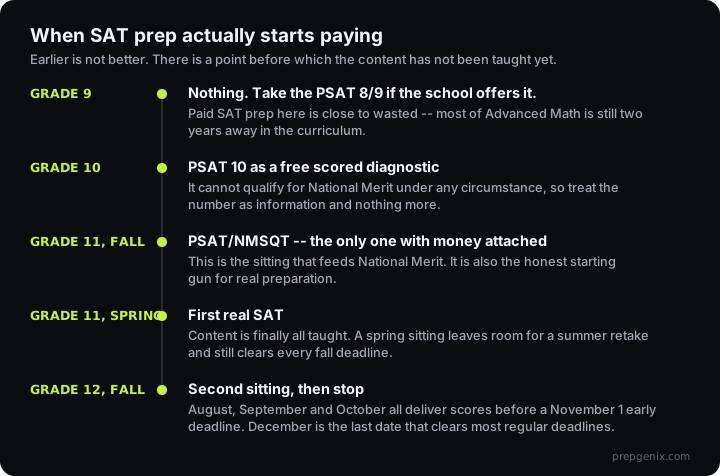
Grades 9 and 10: use the free diagnostics, buy nothing
The PSAT 8/9 and PSAT 10 are worth sitting if the school offers them, for exactly one reason: they generate a score report and cost nothing. Neither carries stakes. PSAT 8/9 does not feed National Merit and is a weak predictor of an eventual SAT score. PSAT 10 cannot qualify for National Merit under any circumstances. The score calculator converts a target score into the raw count it needs.
So read those reports as information about which domains are weak, and then do ordinary schoolwork. The highest-value SAT preparation available to a grade 9 student is reading widely and doing well in math class, and neither of those is billable.
A student targeting National Merit should treat the grade 10 PSAT as a rehearsal, because the grade 11 PSAT/NMSQT is a single sitting with no retake and real money attached. That is a genuine reason to prepare a year early. It applies to a small minority.
Grade 11 autumn: the PSAT/NMSQT, and the starting gun
This is the sitting that matters. The grade 11 PSAT/NMSQT is the only test in the suite that feeds National Merit, where Class of 2026 state cutoffs ran from a Selection Index of 210 to 225 and Commended sat at 210. It happens in October and it does not come round again.
It is also the natural point to begin real SAT work, for a reason that has nothing to do with National Merit: by autumn of grade 11 most students have met essentially all the mathematics the SAT tests. Preparation stops being pre-teaching and starts being preparation. Autumn of grade 12 is harder, because essays and APs are competing for the same time.
Grade 11 spring: the first real SAT
March, May or June of grade 11. This timing does three things at once: the content is all taught, the score is a real diagnostic taken under real conditions, and there is a whole summer plus the autumn of grade 12 available for a retake.
It also removes the worst version of this process, which is a first sitting in October of grade 12 with a November 1 early deadline behind it and no room to respond.
Grade 12 autumn: the sitting that pays
August, September or October. The published retake research is clear that the first retake is where the gain concentrates, and all three of those dates return scores before a 1 November early deadline. The 3 October administration releases on 16 October, which clears it comfortably. Test dates are published well in advance on College Board's dates and deadlines page.
December is the last date that clears most regular-decision deadlines. After that the calendar, not your score, is the constraint.
The other way to answer this: backwards from a date
Grade-based advice is useful for families planning years out. If you already have a test date, the more useful question is how many weeks you need, and for a target of 100 to 150 points that is about sixteen.
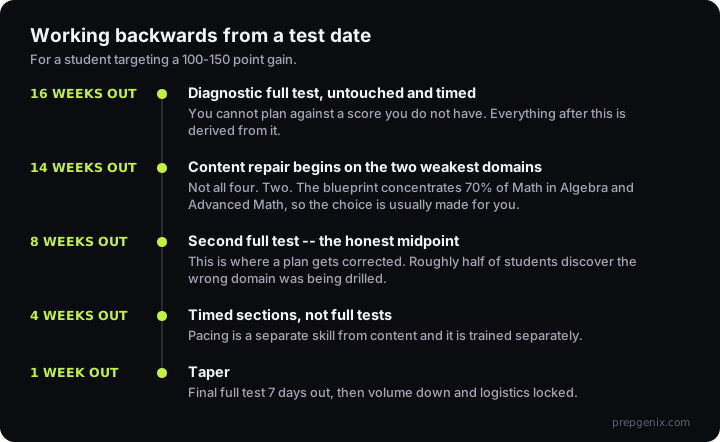
| Target gain | Realistic runway | What it mostly consists of |
|---|---|---|
| 50 points | 4–6 weeks | Pacing, careless-error elimination, one weak skill |
| 100 points | 8–12 weeks | The above, plus genuine content repair in one or two domains |
| 150 points | 16 weeks | Content repair across both sections, with a midpoint correction |
| 200+ points | 6 months or more | Usually a foundations problem rather than an SAT problem |
That last row matters most, because it is the one that gets oversold. A 200-point gain in eight weeks is occasionally real and usually a story about a student whose first score was depressed by something specific: illness, no familiarity with the format, or a routing accident. It is not a plannable outcome.
How much time per week
Six to eight hours during the main block, dropping in the taper week. That is one full practice test every two to three weeks plus three or four focused sessions.
More than about ten hours a week reliably produces diminishing returns during term time, because it comes out of sleep and schoolwork, and a GPA is worth more to an application than the last twenty SAT points. The students who gain most are usually not the ones doing the most hours; they are the ones whose hours are aimed at something specific.
The short version
- Grades 9–10: free PSATs, no paid prep, read widely.
- Grade 11 autumn: PSAT/NMSQT, then start.
- Grade 11 spring: first SAT, with runway behind it.
- Grade 12 autumn: the retake that the data says matters.
- Grade 12 December: the last date that clears most deadlines.
Frequently asked questions
When should I start studying for the SAT?
Autumn of grade 11 for most students, with a first sitting in the spring of grade 11. By then essentially all the mathematics the SAT tests has been covered in class, so preparation stops being pre-teaching and starts being preparation.
Is it too early to start SAT prep in 9th grade?
For paid preparation, usually yes. A meaningful share of SAT Math has not been taught yet, Advanced Math alone is roughly 35% of the section, so tutoring at that stage is paying to teach the curriculum twice. Sitting the free PSAT 8/9 for diagnostic information is worthwhile.
How many months do you need to prepare for the SAT?
Around four months, or sixteen weeks, for a 100 to 150 point gain. Fifty points is realistic in four to six weeks. Gains above 200 points usually indicate a foundations problem rather than an SAT problem and take six months or more.
How many hours a week should I study for the SAT?
Six to eight during the main preparation block, tapering in the final week. That is roughly one full practice test every two to three weeks plus three or four focused sessions. Beyond about ten hours a week the returns fall off, because the time comes out of sleep and schoolwork.
Does the PSAT 10 count for National Merit?
No. Only the grade 11 PSAT/NMSQT feeds National Merit. PSAT 8/9 and PSAT 10 carry no stakes at all and are useful only as free diagnostics, which is worth knowing before a family spends money preparing for either.
When is the best time to take the SAT for the first time?
Spring of grade 11: March, May or June. The content is all taught by then, the score functions as a real diagnostic taken under real conditions, and there is a full summer plus the autumn of grade 12 available for a retake.
What is the last SAT date for college applications?
December of grade 12 for most regular-decision deadlines, and October for a 1 November early deadline. The 3 October 2026 administration returns scores on 16 October, which clears an early deadline comfortably.
Should I prepare for the PSAT?
Only for the grade 11 PSAT/NMSQT, and only if National Merit is realistic for your state's cutoff. It is a single sitting with no retake and real scholarship money attached. Preparing for PSAT 8/9 or PSAT 10 is generally not worth the time or the cost.